Buy asiatoday.eu ?
We are moving the project
asiatoday.eu .
Are you interested in purchasing the domain
asiatoday.eu ?
domain@kv-gmbh.de · 0541-91531010
Buy asiatoday.eu ?
How does nutrition and digestion occur in paramecia?
Paramecia obtain nutrition through phagocytosis, where they engulf food particles such as bacteria or algae using their cilia. Once the food particles are inside the paramecium, they are enclosed in a food vacuole. Digestive enzymes are then secreted into the food vacuole to break down the food particles into smaller molecules. These nutrients are then absorbed by the paramecium for energy and growth. Any undigested material is expelled from the cell through a process called exocytosis. **
Are paramecia animal or plant single-celled organisms?
Paramecia are single-celled organisms that belong to the kingdom Protista. They are considered to be animal-like protists because they are heterotrophic, meaning they obtain their nutrients by ingesting other organisms. Paramecia are not considered to be plants because they do not perform photosynthesis and do not have cell walls made of cellulose. Instead, they have cilia for movement and feed on bacteria and other small organisms. **

Similar search terms for Paramecia
Top-Angebote
Products related to Paramecia:
-
Sesderma Reti Age 5 Liposomal Serum Anti-Aging Innovation 30mLA facial serum for wrinkles and signs of ageing. Reduces wrinkles and fine lines. Hydrates and strengthens barrier. Restores youthful radiance. 5-Retinoid System: smooths wrinkles, accelerates renewal, and boosts collagen. Biomimetic Peptides: fill expression lines by stimulating collagen synthesis.53,26 £*Shipping: 5,22 £Secure redirect to the provider
-
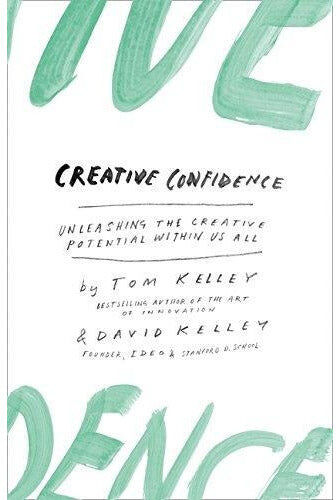
HARPERCOLLINS Creative Confidence by Tom & David Kelley – Unleashing Your Creative Potential & Innovation MindsetA powerful and inspiring book from the founders of IDEO, the award-winning design firm, on unleashing the creativity that lies within each and every one of us. Too often, companies and individuals assume that creativity and innovation are the domain of the ‘creative types’. But two of the foremost experts in innovation, design and creativity on the planet show us that each and every one of us is creative. In an entertaining and inspiring narrative that draws on countless stories from their work at IDEO, and with many of the world's top companies and design firms, David and Tom Kelley identify the principles and strategies that will allow us to tap into our creative potential in our work lives, and in our personal lives, allow us to think outside the box in terms of how we approach and solve problems. ‘Creative Confidence’ is a book that will help each of us be more productive and successful in our lives and in our careers.4,95 £*Shipping: 1,99 £Secure redirect to the provider
-
Euro Cuisine Portable Blender by Euro Cuisine in GreenMake delicious smoothies, healthy drinks and treats quickly with your Mini Mixx personal blender by Euro Cuisine. Just add your favorite fruits, vegetables, juice, ice and then press down to blend. When your drink is ready, simply remove the blade...44,99 $*Shipping: 13,98 $Secure redirect to the provider
-
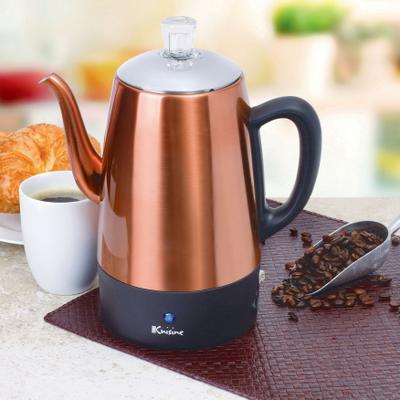
Euro Cuisine 8-Cup Percolator by Euro Cuisine in CopperThe Euro Cuisine 8-Cup model of classic stainless steel percolator with Copper Finish and keep warm function brings coffee making to your kitchen. Piping hot water percolates through the grounds, and pulses up into the glass knob on top to create...69,99 $*Shipping: 16,98 $Secure redirect to the provider


-
What does the competition look like for paramecia?
The competition for paramecia is primarily with other microorganisms in their environment, such as bacteria and other protozoa. They compete for resources such as food and living space. Paramecia use their cilia to move and feed on bacteria and other small organisms, and they also reproduce rapidly, allowing them to outcompete other microorganisms for resources. Additionally, paramecia may also face competition from predators such as other protozoa, small crustaceans, and even some types of algae. **
-
What can be observed with a microscope in paramecia?
With a microscope, one can observe the cilia that paramecia use for movement, as well as their characteristic slipper-like shape. Additionally, the nucleus, contractile vacuoles, and food vacuoles within the paramecia can be seen under a microscope. Observing paramecia under a microscope can also reveal their feeding behavior, as they engulf food particles through a process called phagocytosis. **
-
How does the nutrition and digestion occur in paramecia?
Paramecia obtain nutrition through phagocytosis, where they engulf food particles such as bacteria, algae, and other organic matter. Once inside the cell, the food vacuole containing the engulfed particles fuses with lysosomes, where digestion occurs. Enzymes within the lysosomes break down the food particles into smaller molecules, which are then absorbed and utilized by the paramecium for energy and growth. Waste products are expelled from the cell through a specialized structure called the anal pore. **
-
Why do some paramecia not have a pulsating vacuole?
Some paramecia do not have a pulsating vacuole because they may live in environments with stable water conditions, such as freshwater ponds or slow-moving streams, where they do not need to actively regulate their water balance. Additionally, some species of paramecia may have evolved alternative mechanisms for maintaining water balance, such as specialized contractile vacuoles or other cellular structures. The absence of a pulsating vacuole in certain paramecia may also be a result of genetic variation and adaptation to specific ecological niches. **

What is the ecology of paramecia and yeast cells?
Paramecia are single-celled organisms that are found in freshwater environments. They are heterotrophic, meaning they feed on bacteria and other small organisms. Paramecia play a role in the ecosystem by helping to control bacterial populations and serving as a food source for larger organisms. Yeast cells are also single-celled organisms that are found in various environments, including soil, plants, and the human body. They are important in the process of fermentation, which is used in the production of bread, beer, and wine. Yeast cells also play a role in the decomposition of organic matter and are a food source for other organisms in the ecosystem. **
What is the relationship between predators and prey in paramecia?
In paramecia, the relationship between predators and prey is that of a predator-prey dynamic. Paramecia are single-celled organisms that can act as both predators and prey in their environment. They feed on bacteria and other small organisms, making them predators, while also being consumed by larger organisms, such as amoebas, making them prey. This relationship helps maintain balance in the ecosystem by controlling population sizes and nutrient cycling. **
Top-Angebote
Products related to Paramecia:
-
Elite Cuisine EHC352 Rapid Brew Technology 2-in-1 Capsule Coffee MakerThe Elite Cuisine 2-in-1 Capsule Single Serve Coffee Maker features a compact and sleek design that takes up minimal counter space and fits into small and other limited spaces. Perfect for home or office kitchens, dorm rooms or recreational vehicles.74,68 $*Shipping: 0,00 $Secure redirect to the provider
-
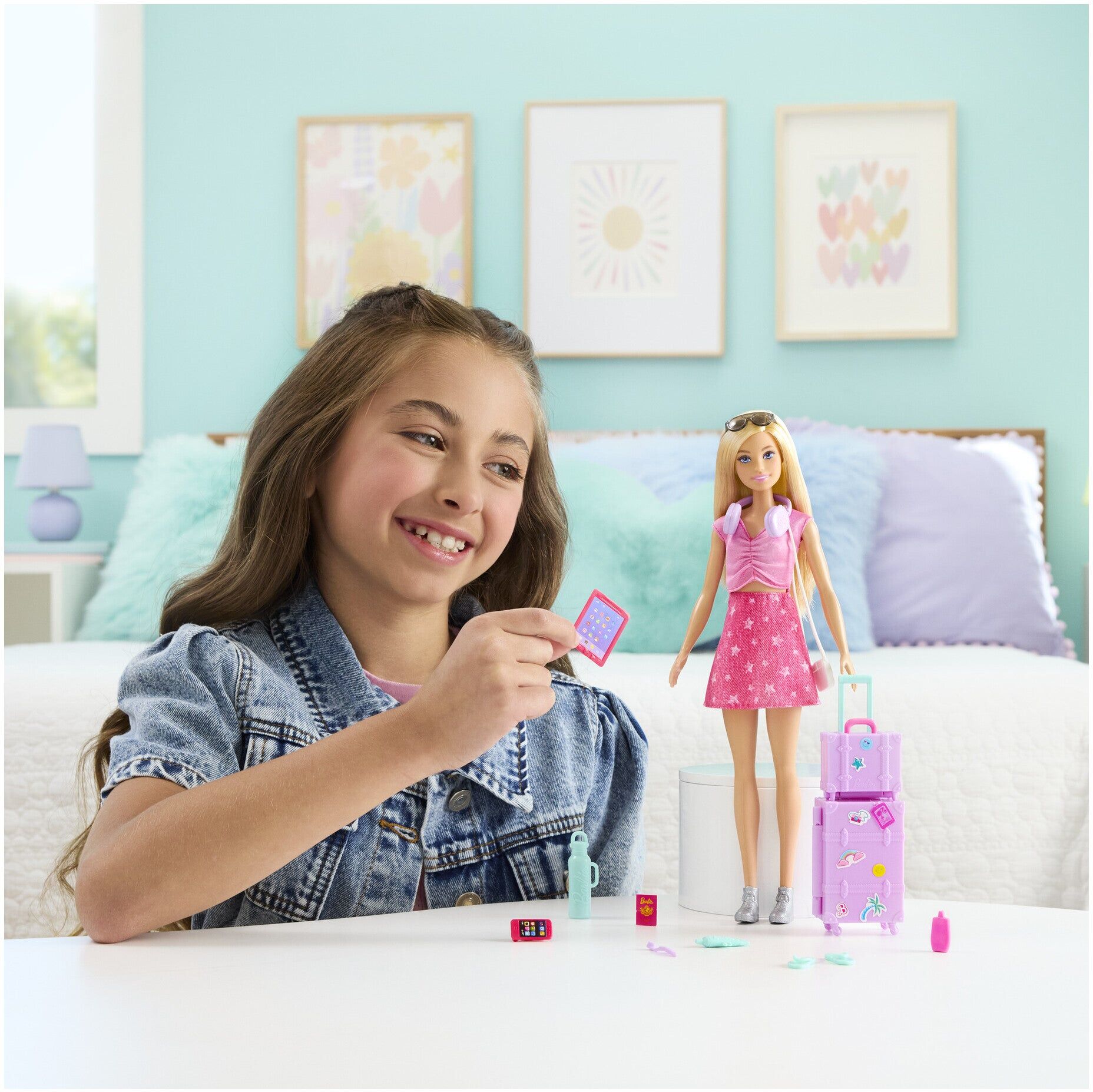
Mattel Barbie Limitless Adventure Malibu Fashion Doll with Travel Accessories for Kids - Travel Accessories - NewPack Barbie Malibu for a brand-new journey with the Barbie Limitless Adventure Malibu Fashion Doll. Designed for imaginative travel play, this fashion doll comes with a collection of accessories to inspire stories at home, on holiday, or wherever adventure takes her. Barbie is ready to go with two stackable suitcases that open for packing and unpacking, plus a carry-on purse for her smaller essentials. Children can pretend to check in for a flight, explore a new destination, or plan a fun weekend away using the included travel-themed accessories. Her accessories include a passport, water bottle, tablet, smartphone, headphones, toothbrush, toothpaste, sunscreen, sunglasses, and a pair of flip-flops for changing her look on the move. A colourful sticker sheet allows children to personalise the luggage and add their own creative touches. With its familiar Barbie styling and travel theme, this set encourages role play, storytelling, and everyday-life play. The doll has an articulated body for posing and flexibility.20,49 £*Shipping: 3,95 £Secure redirect to the provider
-
Sesderma Reti Age 5 Liposomal Serum Anti-Aging Innovation 30mLA facial serum for wrinkles and signs of ageing. Reduces wrinkles and fine lines. Hydrates and strengthens barrier. Restores youthful radiance. 5-Retinoid System: smooths wrinkles, accelerates renewal, and boosts collagen. Biomimetic Peptides: fill expression lines by stimulating collagen synthesis.53,26 £*Shipping: 5,22 £Secure redirect to the provider
-
HARPERCOLLINS Creative Confidence by Tom & David Kelley – Unleashing Your Creative Potential & Innovation MindsetA powerful and inspiring book from the founders of IDEO, the award-winning design firm, on unleashing the creativity that lies within each and every one of us. Too often, companies and individuals assume that creativity and innovation are the domain of the ‘creative types’. But two of the foremost experts in innovation, design and creativity on the planet show us that each and every one of us is creative. In an entertaining and inspiring narrative that draws on countless stories from their work at IDEO, and with many of the world's top companies and design firms, David and Tom Kelley identify the principles and strategies that will allow us to tap into our creative potential in our work lives, and in our personal lives, allow us to think outside the box in terms of how we approach and solve problems. ‘Creative Confidence’ is a book that will help each of us be more productive and successful in our lives and in our careers.4,95 £*Shipping: 1,99 £Secure redirect to the provider
-
How does nutrition and digestion occur in paramecia?
Paramecia obtain nutrition through phagocytosis, where they engulf food particles such as bacteria or algae using their cilia. Once the food particles are inside the paramecium, they are enclosed in a food vacuole. Digestive enzymes are then secreted into the food vacuole to break down the food particles into smaller molecules. These nutrients are then absorbed by the paramecium for energy and growth. Any undigested material is expelled from the cell through a process called exocytosis. **
-
Are paramecia animal or plant single-celled organisms?
Paramecia are single-celled organisms that belong to the kingdom Protista. They are considered to be animal-like protists because they are heterotrophic, meaning they obtain their nutrients by ingesting other organisms. Paramecia are not considered to be plants because they do not perform photosynthesis and do not have cell walls made of cellulose. Instead, they have cilia for movement and feed on bacteria and other small organisms. **
-
What does the competition look like for paramecia?
The competition for paramecia is primarily with other microorganisms in their environment, such as bacteria and other protozoa. They compete for resources such as food and living space. Paramecia use their cilia to move and feed on bacteria and other small organisms, and they also reproduce rapidly, allowing them to outcompete other microorganisms for resources. Additionally, paramecia may also face competition from predators such as other protozoa, small crustaceans, and even some types of algae. **
-
What can be observed with a microscope in paramecia?
With a microscope, one can observe the cilia that paramecia use for movement, as well as their characteristic slipper-like shape. Additionally, the nucleus, contractile vacuoles, and food vacuoles within the paramecia can be seen under a microscope. Observing paramecia under a microscope can also reveal their feeding behavior, as they engulf food particles through a process called phagocytosis. **
Similar search terms for Paramecia
-
Euro Cuisine Portable Blender by Euro Cuisine in GreenMake delicious smoothies, healthy drinks and treats quickly with your Mini Mixx personal blender by Euro Cuisine. Just add your favorite fruits, vegetables, juice, ice and then press down to blend. When your drink is ready, simply remove the blade...44,99 $*Shipping: 13,98 $Secure redirect to the provider
-
Euro Cuisine 8-Cup Percolator by Euro Cuisine in CopperThe Euro Cuisine 8-Cup model of classic stainless steel percolator with Copper Finish and keep warm function brings coffee making to your kitchen. Piping hot water percolates through the grounds, and pulses up into the glass knob on top to create...69,99 $*Shipping: 16,98 $Secure redirect to the provider
-
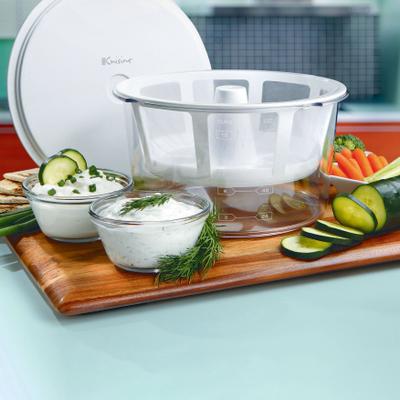
Euro Cuisine Greek Yogurt Maker by Euro Cuisine in WhiteNow you can prepare Greek yogurt dishes quickly and easily with Euro Cuisine! This unique strainer kit which is BPA Free transforms up to 2qts of ordinary Euro Cuisine homemade yogurt or store bought yogurt into thick, creamy Greek yogurt in a...29,99 $*Shipping: 11,98 $Secure redirect to the provider
-
Orion Strangeworlds Travel Agency: Adventure in the Floating Mountains by L.D. Lapinski – World Book Day AdventureIt is the once-every-century Cloud-Wish Festival in the magical world of Strofadia, and Flick and Jonathan have travelled via suitcase to be a part of it.Strofadia is a land of flight and fantasy, where the people are born with wings and the great floating mountains are seen as the source of fantastic power. There are three floating mountains, with the largest being known as the home of the great Cloud Dragon - keeper of magic and granter of wishes. The people of Strofadia take their magical wishes (in the form of a physical bead-like object) to the dragon, in the hopes that the wish will be granted at the end of the festival when the dragon appears.Flick and Jonathan have fun exploring Strofadia, but when the moons rise, there is no sign of movement from the mountain.Will Flick and Jonathan be able to find out what happened to the dragon and save the festival and the land of Strofadia from disaster?A 2023 World Book Day Title0,99 £*Shipping: 1,99 £Secure redirect to the provider
-
How does the nutrition and digestion occur in paramecia?
Paramecia obtain nutrition through phagocytosis, where they engulf food particles such as bacteria, algae, and other organic matter. Once inside the cell, the food vacuole containing the engulfed particles fuses with lysosomes, where digestion occurs. Enzymes within the lysosomes break down the food particles into smaller molecules, which are then absorbed and utilized by the paramecium for energy and growth. Waste products are expelled from the cell through a specialized structure called the anal pore. **
-
Why do some paramecia not have a pulsating vacuole?
Some paramecia do not have a pulsating vacuole because they may live in environments with stable water conditions, such as freshwater ponds or slow-moving streams, where they do not need to actively regulate their water balance. Additionally, some species of paramecia may have evolved alternative mechanisms for maintaining water balance, such as specialized contractile vacuoles or other cellular structures. The absence of a pulsating vacuole in certain paramecia may also be a result of genetic variation and adaptation to specific ecological niches. **
-
What is the ecology of paramecia and yeast cells?
Paramecia are single-celled organisms that are found in freshwater environments. They are heterotrophic, meaning they feed on bacteria and other small organisms. Paramecia play a role in the ecosystem by helping to control bacterial populations and serving as a food source for larger organisms. Yeast cells are also single-celled organisms that are found in various environments, including soil, plants, and the human body. They are important in the process of fermentation, which is used in the production of bread, beer, and wine. Yeast cells also play a role in the decomposition of organic matter and are a food source for other organisms in the ecosystem. **
-
What is the relationship between predators and prey in paramecia?
In paramecia, the relationship between predators and prey is that of a predator-prey dynamic. Paramecia are single-celled organisms that can act as both predators and prey in their environment. They feed on bacteria and other small organisms, making them predators, while also being consumed by larger organisms, such as amoebas, making them prey. This relationship helps maintain balance in the ecosystem by controlling population sizes and nutrient cycling. **
* All prices are inclusive of VAT and, if applicable, plus shipping costs. The offer information is based on the details provided by the respective shop and is updated through automated processes. Real-time updates do not occur, so deviations can occur in individual cases. ** Note: Parts of this content were created by AI.